
Battery Storage — stationary energy storage for research and industry
Concept, engineering and complete electromechanical build of container-format battery storage systems — from an EU-funded research project on braking-energy recovery with KIT to industrial storage. 2020–2022.
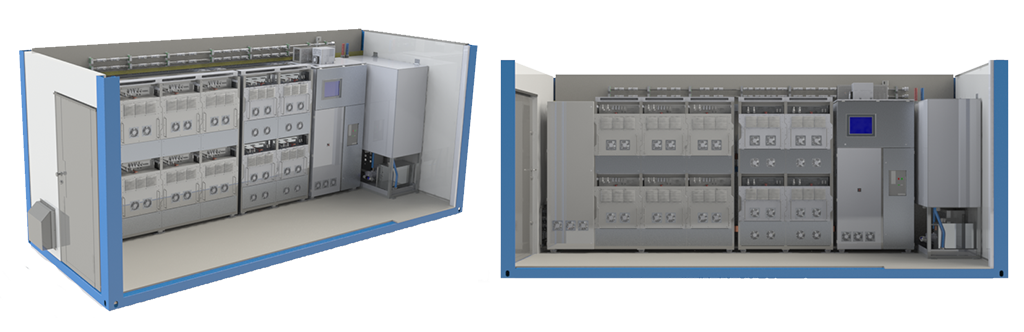
Field
Energy storage / grid stability & e-mobility
System
Stationary battery storage (1 MW class, 20-ft container)
Our part
Concept · Engineering · Cooling concept · Electromechanics · Container fit-out
Period
2020–2022
The Challenge
Stationary battery storage systems must hold large amounts of energy safely, robustly and with easy servicing — in the field under changing environmental conditions. The task was a storage concept in a standardised container format, suitable for both research and industrial use: thermally manageable, service-friendly, transportable and easy to install.
Our Contribution
Two projects on a shared storage platform — the entire storage system conceived, engineered and drawn single-handedly, coordinated with suppliers:
• Research project with KIT (EU-funded) — recovery and storage of braking energy in tram networks
• Industrial project — battery storage in a 20-ft container for an automotive manufacturer, together with a battery manufacturer
• Inverters and back-boost converters — concept and mechanical construction
• Cooling concept for the storage system
• Complete container fit-out
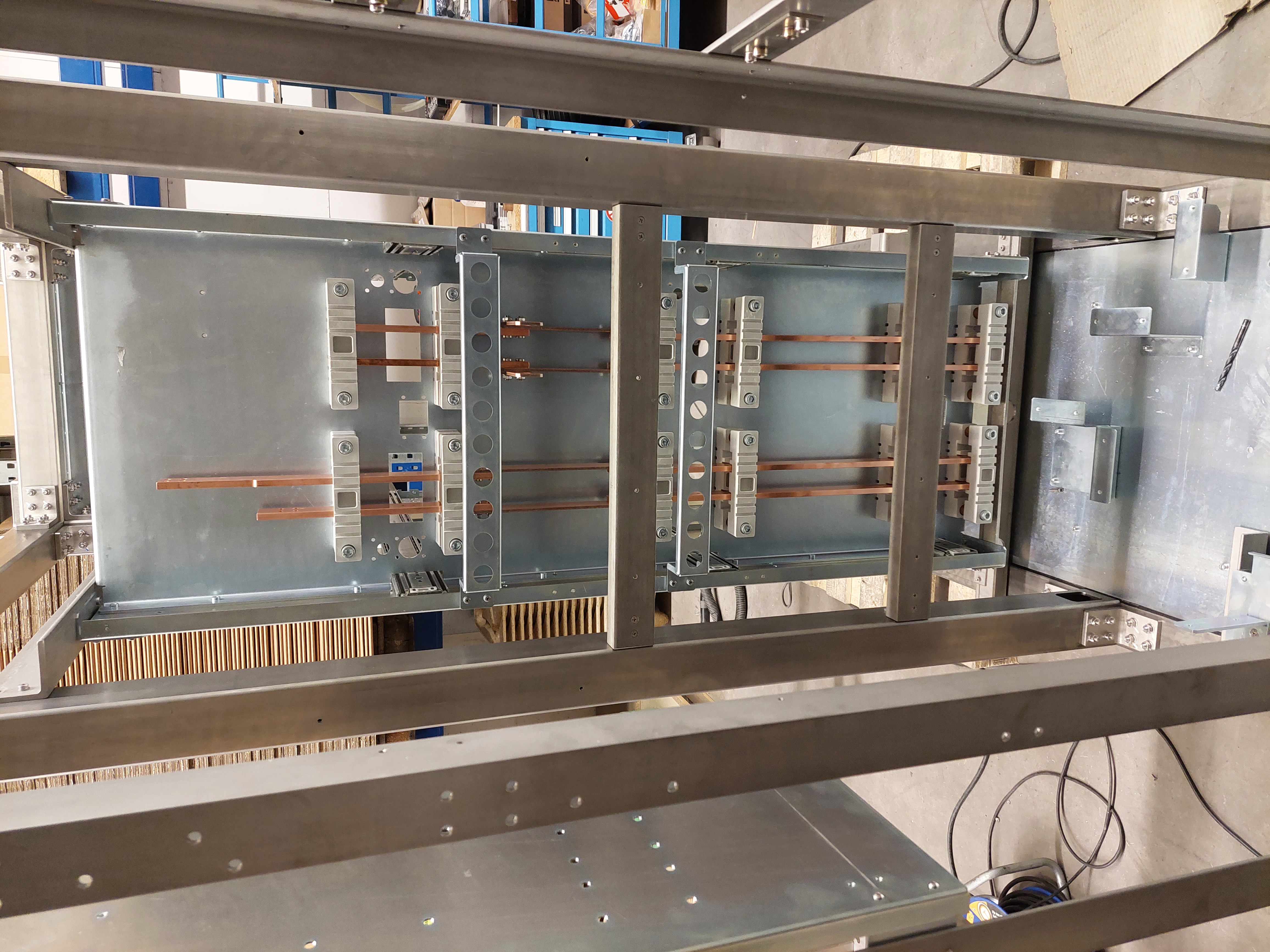
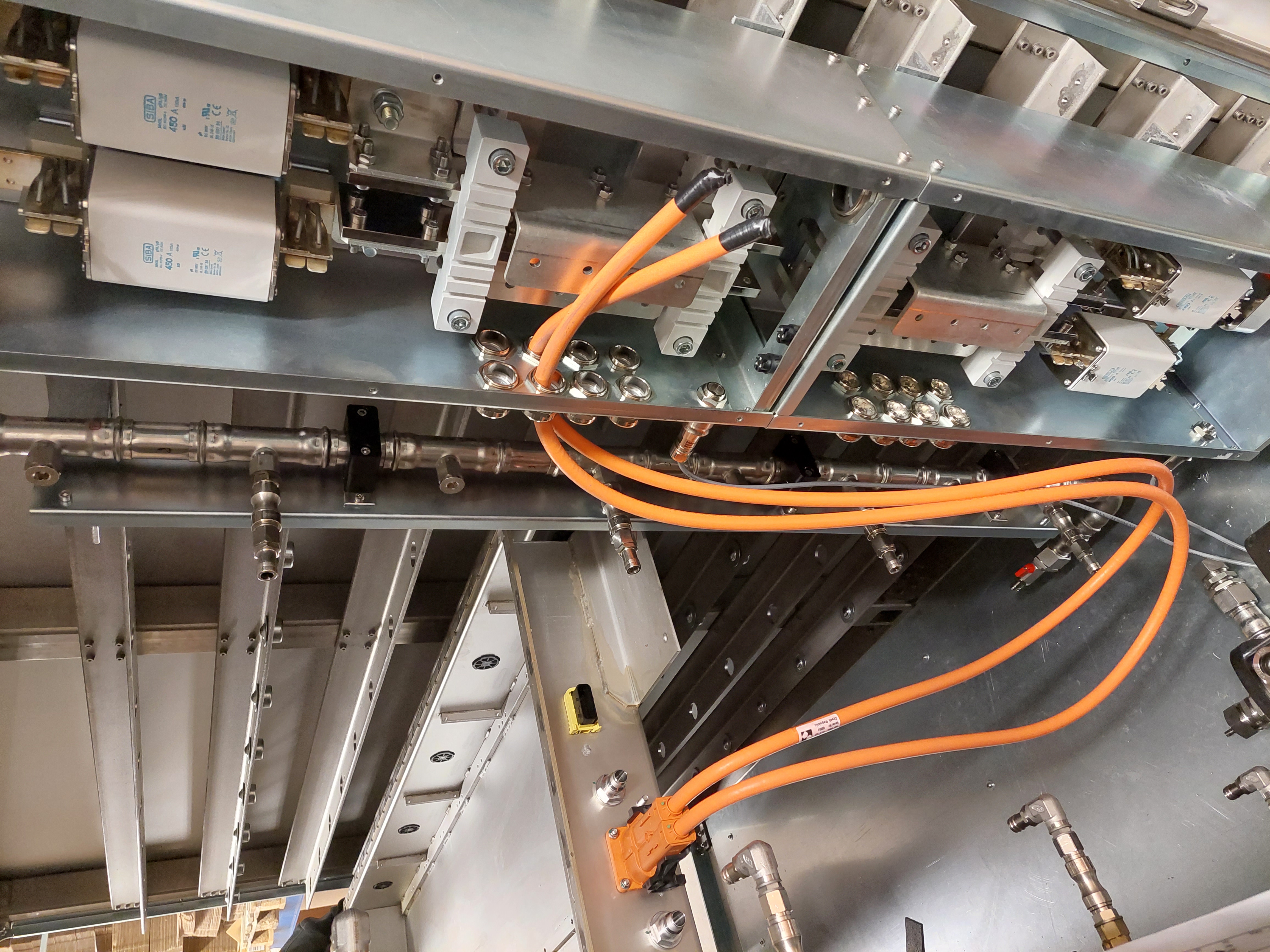
• Entire electromechanics — control cabinet, connection panels, system technology; specially engineered devices, coordinated with suppliers
The Result
A storage platform spanning from the EU-funded research project (braking-energy recovery for tram networks, together with KIT) to industrial use for an automotive manufacturer — the entire concept and engineering realisation from a single source, from the cooling concept through the electromechanics to the container fit-out.
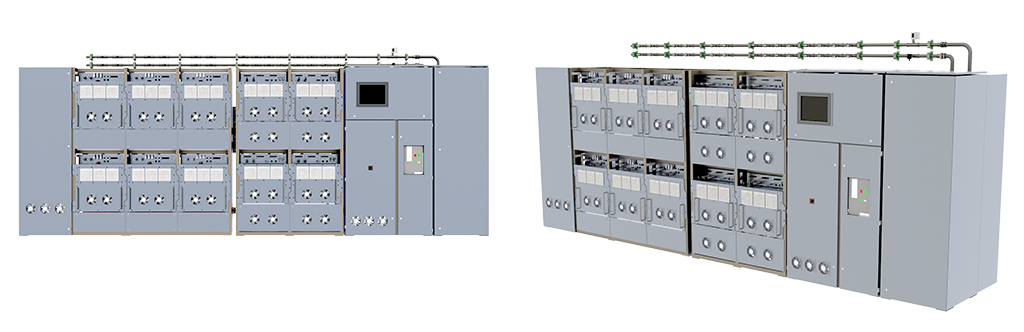
Indoor variant (1 MW)
Skills applied
Industrial Design · Container and enclosure engineering · Electromechanics · Cooling concept · System integration · Design for harsh environments
Your energy-storage or systems project?
From concept through cooling and electromechanics to the finished build — let's talk.
NEXUS-E — Hybrid High-Power Charging Infrastructure
System concept, engineering, and IP for a fuel-cell-supported fast-charging station — from architecture to final product design. Developed 2017–2024.
Sector
E-Mobility · Energy Technology · R&D
System
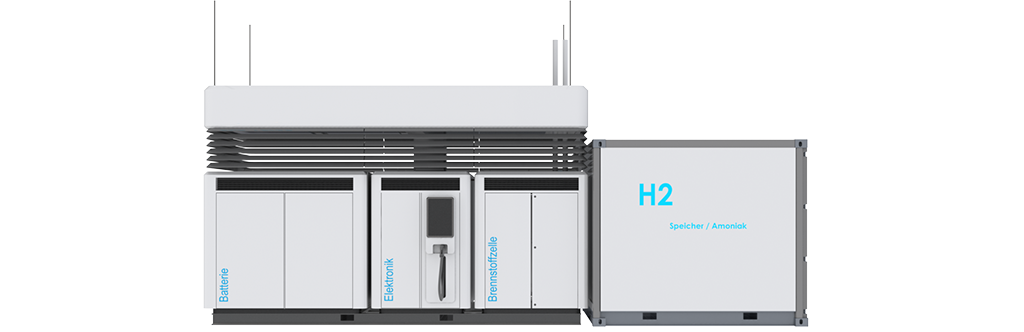
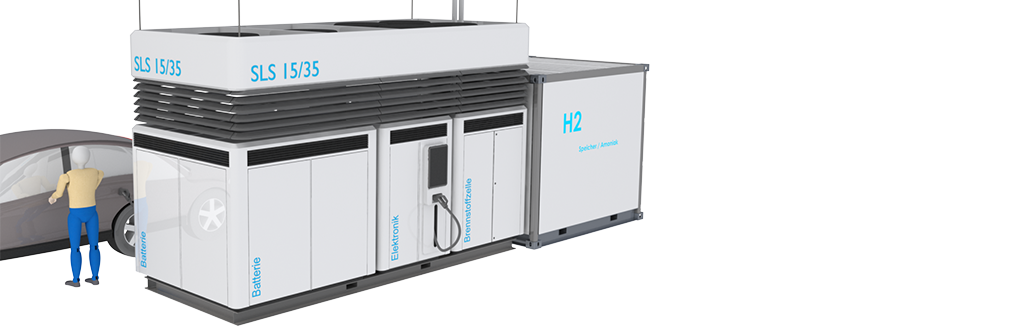
Hybrid fast-charging station — fuel cell + modular battery storage + H₂ supply
Our part
Concept · Engineering · Industrial Design · IP Filing
Status
Research & Prototype · Company founded 2019
The task
High-power EV charging only works reliably where the grid can sustain peak loads — a fundamental infrastructure problem. The challenge was a complete system concept capable of delivering up to 350 kW per vehicle largely independent of the grid: robust, maintainable, scalable, and future-proof for both battery and fuel cell vehicles.
Our contribution
Full system architecture through to series-ready design — from a single source:
• Full system concept — fuel cell (40–450 kW) + modular battery storage + optional grid connection
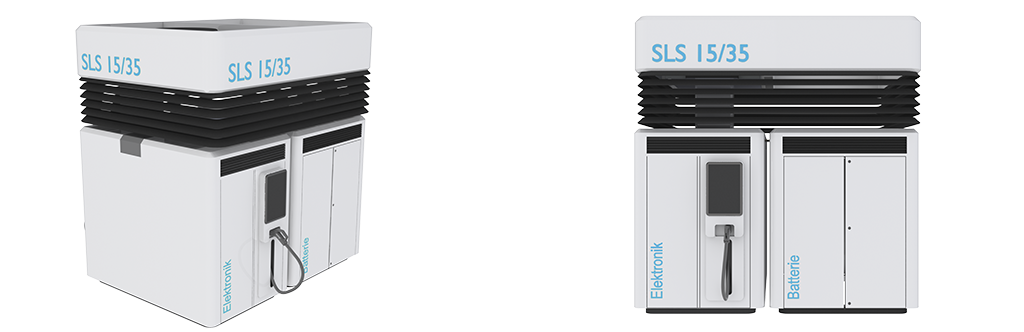
• Enclosure design & engineering — compact housing, active liquid cooling, 17″ HMI, CCS2
• Modular energy storage — battery modules hot-swappable during active charging
• Hydrogen-based power generation — fuel cells produce the charging power on site, largely independent of the available grid capacity
• Intelligent energy management — bidirectional controllers between independent storage strings
• 3 patent filings (DE) — modular storage · hybrid charging station · H₂ integration
• Spin-off product line — concept became the foundation for the standalone PSU charging unit
The result
A fully engineered high-power charging infrastructure (up to 350 kW/vehicle), three patent applications, complete engineering documentation, and 3D renderings. The research project ran from 2017 to 2024 — leading to a company founding and a standalone product line.
Capabilities applied
Concept Development · Industrial Design · Engineering · Energy Systems · Thermal Management · IP Filing (DE)
Your next infrastructure or product project?
From system concept and patents to series-ready design — let’s talk.
Wind Power Converter 2.5 MW — Enclosure & System Design
Full-power converter enclosure for 2.5 MW onshore wind turbines — from mechanical concept to series-ready design. Installed in the turbine tower base.

Sector
Power Electronics / Renewable Energy
Product
Full-power converter enclosure · 2.5 MW · 690 V · Onshore
Scope
Mechanical design, cooling system, busbar routing, documentation
Period
2012 – 2014
The task
A 2.5 MW full-power converter for onshore wind turbines requires an enclosure that is robust under harsh conditions, service-friendly in confined tower spaces, and thermally optimised for continuous high-power operation. The design had to accommodate a complete water cooling system, a DC/AC copper busbar network, and a plug-in rack system — all within a welded steel frame.
Our contribution
Complete 3D mechanical design in SolidWorks — from concept to production-ready documentation:
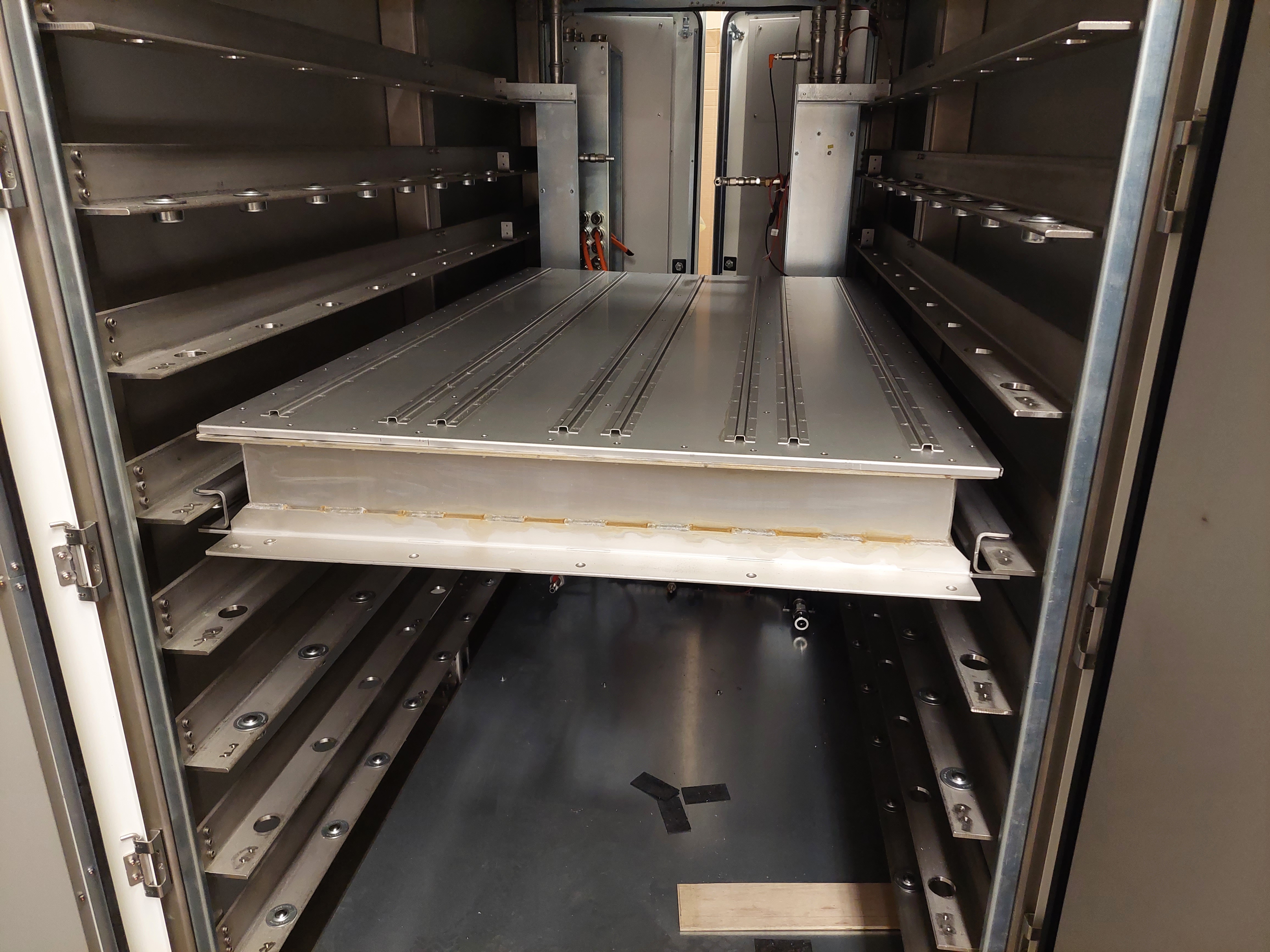
• Welded steel frame with plug-in rack system (60+ assemblies)
• Water cooling system — cooling plates, manifold pipes, hydraulic brackets, seal frames
• Copper busbar network DC / grid / PE
• Reactor mounting, drawing set + BOM Rev.06, test & acceptance specification

The result
A series-ready full-power converter enclosure for 2.5 MW onshore wind turbines — complete with 3D model, 2D drawings, BOM, and test & acceptance specification.
Active Harmonic Filters — from concept to series production
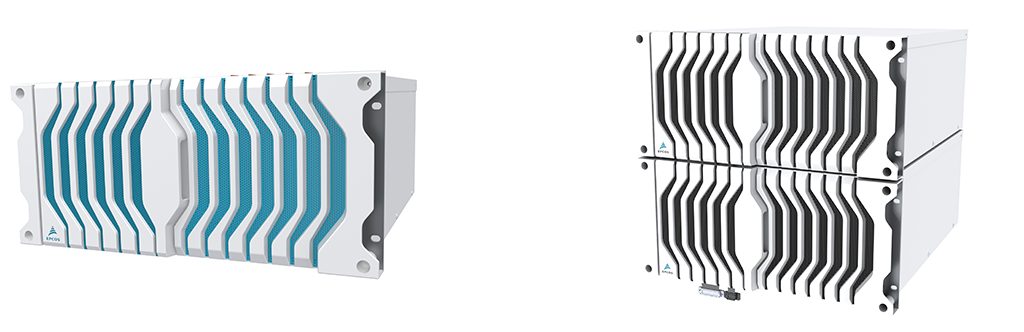
Power quality devices, developed entirely from a single source — from conception to on-site installation. Manufactured several thousand times, in use across industries.
Sector
Power Quality / Industry
Devices
Active Harmonic Filters — air- and water-cooled, multiple power classes
Our part
Conception · development · engineering · design · production equipment · on-site installation
Series & deployment
Manufactured several thousand times — ships, chip production, automotive industry
The task
Harmonics put a strain on industrial power grids — causing losses, interference and compliance problems. Active harmonic filters compensate for them in real time. What was needed was a device family that is compact and service-friendly , robust for harsh environments, scalable across many power classes, in air and water cooling — and ready for series production for high volumes.
Our contribution
We were responsible for the complete device development — everything from a single source:
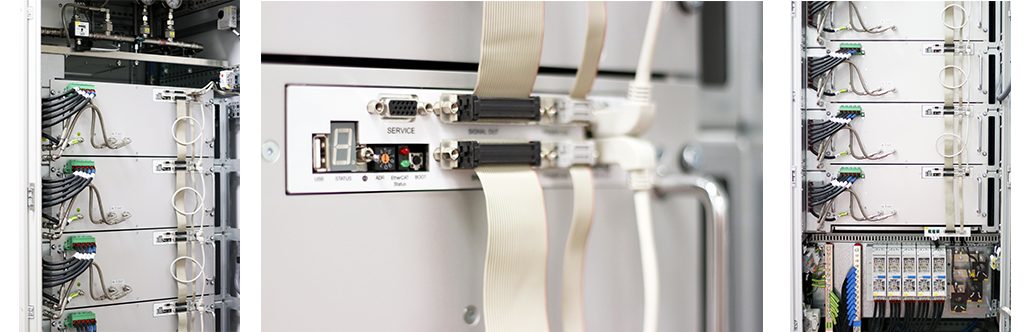
• Conception & industrial design
• Development & engineering — enclosure, mechanics, cooling (air & water)
• Consistent design across all power classes
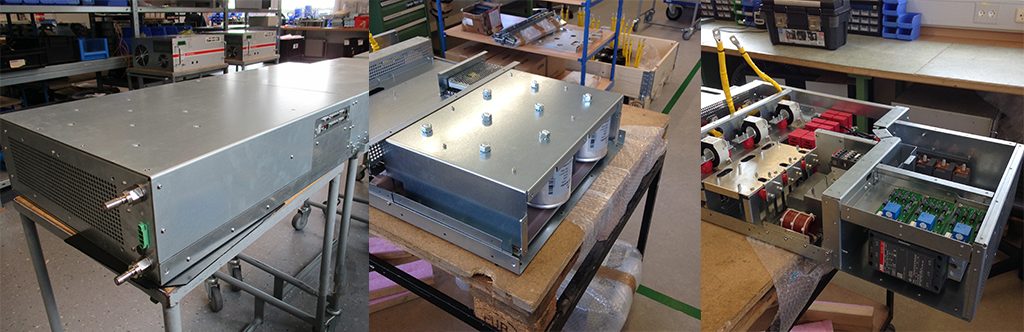
• Production equipment for series manufacturing
• On-site installation, commissioning and site supervision
• Validated by thermal simulation
The result
The Active Harmonic Filters went into real series production: manufactured several thousand times and in use across industries — from ships to chip production and into the automotive industry. A scalable product family (air- and water-cooled, multiple power classes) that has proven itself in continuous operation under harsh conditions. As reference projects, we supported the installation of the systems at a Stuttgart-based automotive manufacturer across several sites in Germany and abroad — with on-site construction and team supervision, planning and scheduling, coordination with the client and other trades, and quality control of the results.
Capabilities applied
Industrial design · engineering · thermal (air & water) · series development · production equipment · on-site installation
Your power quality or series project?
From concept through engineering to series production — let's talk about it.

